ICEVI European Newsletter
ISSN Number 2666-1527
Issue 88, Volume 32 number 1, Spring 2026
Coordinated by Andrea Hathazi ahathazi@yahoo.com
Edited by Stephen McCall s.mccall@bham.ac.uk and
Martha Gyftakos mgyftakos@yahoo.com
Designed by Istvan Mozes webmaster@icevi-europe.org
Subscription:
If you want to subscribe for ICEVI European Newsletter, or to stop receiving it, please send an e-mail message to: webmaster@icevi-europe.org.
Content:
President’s Message – Spring 2026
Seeing the Difference: Supporting Individuals with Intellectual Disabilities to Wear Glasses
Articles from the National Organization of the Spanish Blind (ONCE)
Blind spots in sighted people regarding tactile images.
The Taste of Independence: Supporting Self-Determination Through Everyday Activities
EXTRAORDINARY – a film for all
President’s Message – Spring 2026
John Ravenscroft, President, ICEVI Europe
As we move further into 2026, I continue to be struck by the breadth of work taking place across Europe in support of children, young people, and adults with visual impairment, deafblindness, and multiple disabilities. This issue of the newsletter reflects something that has become increasingly clear to me during my time as President: innovation in our field is no longer happening in isolated spaces. It is emerging through collaboration, through listening, and through the willingness to rethink what inclusion truly means.
Across Europe we are seeing a shift from service delivery for people to service design with people. This may appear to be a subtle change in language, but it represents a profound transformation in practice. Whether we are discussing education, employment, family support, re-habilitation, tactile access, leisure, or research, the question is no longer simply what support should we provide? Rather, we are asking how can we create conditions where people exercise agency, participate fully, and shape their own lives?
Several contributions in this edition illustrate this beautifully.
The work from ONCE in Spain demonstrates how accessibility can open doors to areas that have often been considered difficult to reach for learners with visual impairment. Their “Biological Mission” science campus shows how science education can become multisensory, experiential, and exciting when barriers are intentionally removed. Young people explored biology not through observation alone, but through touch, sound, participation, experimentation, and shared discovery. Equally important is the emphasis on social connection and identity that accompanies such experiences. Science becomes not merely knowledge acquisition, but belonging.
The ONCE employability forum offers another important reminder. Transition into higher education and employment remains one of the great challenges across Europe. Yet the forum highlights something we sometimes overlook: employability is not simply about jobs; it is about confidence, networks, self-knowledge, communication, and opportunity. These are the foundations upon which inclusion in adult life is built.
This issue also highlights the growing importance of tactile understanding and literacy. Dorine in ’t Veld’s reflections challenge us to reconsider assumptions about tactile images and how they are introduced. The idea that tactile graphics represent a “language” requiring explicit teaching is both powerful and important. Too often we assume accessibility exists once materials are produced. Yet accessibility is also about mediation, interpretation, and learning. The development of tactile competence remains one of the critical areas for future work across education and rehabilitation.
Research likewise continues to strengthen our field. The work from Finland on bodily-tactile early intervention reminds us that communication begins long before language. The emphasis on touch, movement, reciprocity, and emotional connection between mothers and young children with visual impairment and additional disabilities highlights the importance of relationships in early development. It is an excellent example of research translating directly into meaningful practice.
I was also encouraged by the contribution from The Taste of Independence project. Self-determination is increasingly recognised as a cornerstone of quality of life, yet implementing it meaningfully can be complex. The project’s focus on cooking, leisure, decision-making, and everyday participation reminds us that independence is often built through ordinary experiences. Sometimes the most significant transformations occur not in specialist environments, but around kitchens, shared activities, and daily routines.
As ICEVI Europe, our responsibility is not only to celebrate these initiatives but to connect them. We sit at an important intersection between research, policy, practice, and lived experience. Our strength lies in bringing diverse voices together: educators, researchers, practitioners, families, organisations, and importantly people with lived experience of visual impairment and deafblindness.
Looking ahead, several priorities remain clear.
First, we must continue strengthening evidence-informed practice. Europe is producing outstanding work, yet much of it remains locally known. Sharing knowledge across borders remains essential. Second, inclusion must continue to expand beyond access. Access matters deeply, but participation, belonging, autonomy, and identity matter equally. Third, we need to maintain our focus on those who remain underrepresented: individuals with visual impairment and additional disabilities, children with cerebral visual impairment, people with intellectual disabilities, those experiencing intersectional disadvantage, and communities where services remain limited.
Finally, we must remain optimistic.
Our field has always been characterised by creativity and resilience. The articles in this issue show educators redesigning science experiences, researchers advancing early intervention, practitioners rethinking tactile communication, and organisations creating new pathways towards independence and employment. These are not isolated successes; they are indicators of a field that is evolving.
I would like to thank everyone who contributed to this issue and, more broadly, all those across Europe whose daily work often happens quietly—in classrooms, family homes, clinics, universities, organisations, community settings, and policy spaces. Your work matters, and together it continues to shape a more inclusive future.
I hope you enjoy this Spring edition of the ICEVI Europe Newsletter and that it inspires new conversations, partnerships, and ideas.
With best wishes,

Dr John Ravenscroft
President, ICEVI - Europe
Seeing the Difference: Supporting Individuals with Intellectual Disabilities to Wear Glasses
Witte, A. M., Hilberink, B., Frederiks, K., Verwey-Lakerveld, J., van Duijvenboden, T., & Sterkenburg, P. S.
Vrije Universiteit Amsterdam, Bartiméus & Affect-us
Visual impairments caused by refractive errors affect the daily lives and wellbeing of people with intellectual disabilities. Refractive errors can be identified during eye examinations and are often correctable with glasses. However, many people with intellectual disabilities who could benefit from wearing glasses do not wear them, in part because professional support is often needed to become accustomed to wearing glasses. Current literature largely lacks evidence-based interventions to evaluate the potential effects of wearing glasses in individuals with intellectual disabilities.
To address this gap, we conducted a single-case study and a Delphi study. The case study evaluated the effectiveness of the Glasses Habituation Program in a Dutch male with severe intellectual disability. The results showed that wearing glasses indoors decreased attention to objects further away, possibly because objects were recognised faster. Interviews with the participant’s caregiver and father showed that visual (related) behaviours improved, especially outdoors. Finally, caregiver-reported questionnaires revealed better adaptive functioning but slightly decreased well-being.
The Delphi study examined the perspectives of 12 Dutch professionals on wearing glasses by individuals with ID. All professionals had experience with the implementation of the Glasses Habituation Program. Professionals identified key factors for the provision (e.g., family members believe in the added value of providing glasses) and successful use of glasses (e.g., glasses are consistently provided) and agreed on their potential positive effects across different domains (e.g., improved social interactions and greater self-reliance).
Replication of these findings in larger randomized controlled trials (RCTs) would support the added value of glasses for people with intellectual disabilities. Researching the effects of wearing glasses in individuals with intellectual disabilities comes with both challenges and opportunities, as discussed in our comment article.
References:
Hilberink, B., Frederiks, K., Verwey-Lakerveld, J., Van Duijvenboden, T., & Sterkenburg, P. S. (2024). The added value of wearing glasses: Persons with profound to moderate intellectual disabilities. British Journal of Visual Impairment, 02646196241268099. https://doi.org/10.1177/026461962412680
The Glasses Habituation program (currently only available in Dutch) https://kennisoverzien.nl/sites/default/files/2022-10/Interventiebeschrijving%20Brilgewenning%20def_2021-09.pdf)
Witte, A. M., Hilberink, B., Frederiks, K., Verwey-Lakerveld, J., van Duijvenboden, T., & Sterkenburg, P. S. (2025). Just give it a try: A single-subject multiple baseline study and a Delphi study to support individuals with moderate to profound intellectual disabilities to wear glasses. British Journal of Visual Impairment, 02646196251390486. https://doi.org/10.1177/02646196251390486
Articles from the National Organization of the Spanish Blind (ONCE)
Article 1
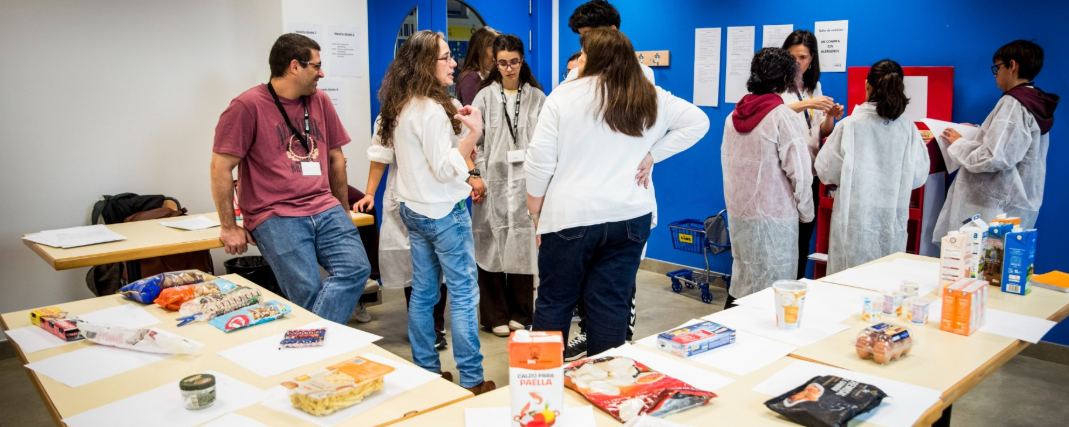
A group of fourteen Spanish students (13-17 years old) with visual impairment from the National Organization of the Spanish Blind (ONCE), took part in a science campus workshop called "Biological Mission".
From 20 to 22 March, the ONCE Educational Resource Centres in Madrid and Barcelona (centres that offer resources and professional services for people with visual impairment and/or deafblindness) hosted the 4th Scientific Campus for young students.
Why a scientific Campus based on biology?
For many students with vision impairment, science subjects are a great challenge due to their high visual content and skill requirements. The lack of accessibility, and the lack of knowledge among teachers of how to adapt practical tasks and develop inclusive methodologies often means that students with visual impairment have low participation and little interest in science. This Campus event was created to change this situation, working with students to adapt the visual components in science lessons with tactile, auditory and multisensory strategies that enable them to build meaningful knowledge and learning.
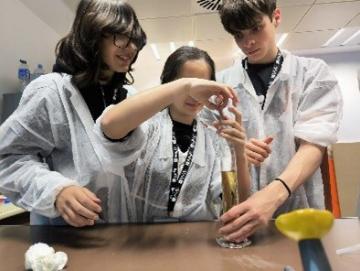
The aim of the "Biological Mission" campus workshop has been to bring science to visually impaired students through accessible practical experiences, while encouraging scientific thinking, curiosity and interest in scientific disciplines.
What activities were part of the program?
The program included a wide variety of practical biology workshops, taught by specialist teachers from the Educational Resource Centres of ONCE (CRE) and external researchers.
One of the main workshops was on nutrition, designed and developed by researchers from the Institute for Research in Food Sciences (CIAL), a centre funded by the Spanish National Research Council (CSIC) and the Autonomous University of Madrid (UAM).

Through these activities, students could:
Explore flavours, aromas and textures to identify foods through sensory perception.
Learn about healthy eating habits.
Learn to critically interpret information about allergens on food labels.
Prepare their own healthy snacks.
The program also included other workshops focused on key concepts of biology, approached from accessible and creative methodologies, such as:
Genetics activities linking DNA with music.
Dissection of a real heart to understand its structure.
Analysis of physical properties of bones, such as rigidity and elasticity.
Study of the different types of reproduction in living beings.
Exploration of animal species using adapted materials.
Learning beyond our classroom
The campus also incorporated outdoor activities, promoting the value of experiential and practical learning. Through these activities, students were able to identify and differentiate plant families and species, understand ecosystems and apply the knowledge acquired in a natural environment, using tactile and auditory cues. The spaces where these activities took place were:
• The Montjuïc Botanical Garden, in Barcelona.
• The Green Corridor of O'Donnell, in Madrid.
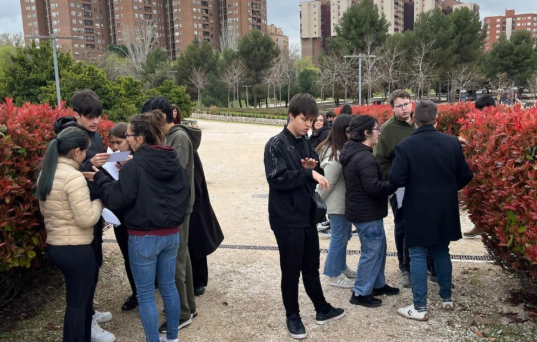
The program also included scientific games, such as a biology “Pasapalabra” at the beginning to evaluate previous knowledge and a scientific “Trivia” game that allowed the course content and the learning acquired to be assessed in a fun way.
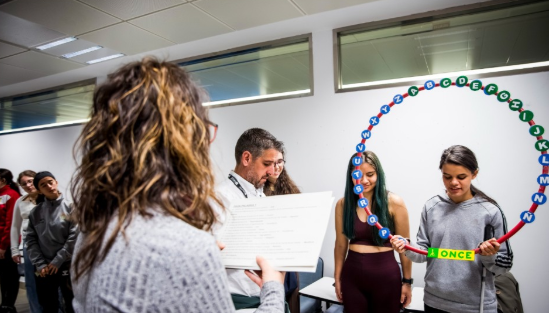
The Science Campus ended with a colloquium on biology and visual impairment, where students shared personal experiences, learning strategies and reflected on accessibility in science teaching.
Beyond academic content, the Campus had a strong social component as it enabled students with visual impairment to meet other young people in a scientific learning environment. Sharing experiences and topics of interest is essential to improving the social competence of young people with visual impairment and deafblindness.
To find out more about the “Biological Mission” Campus, please watch the following video: https://www.youtube.com/watch?v=afIoSeLrACA
Article 2
Last February ONCE held the first National Forum of Higher Studies for 30 students with visual impairment aged between 18-30 years who are completing higher education programmes (university, master's degree and higher VET programs- Vocational Education and Training).
The Forum was held on between the 13 and 15 of February in different buildings of the ONCE (National Organization of the Spanish Blind) Social Group in the city of Madrid.
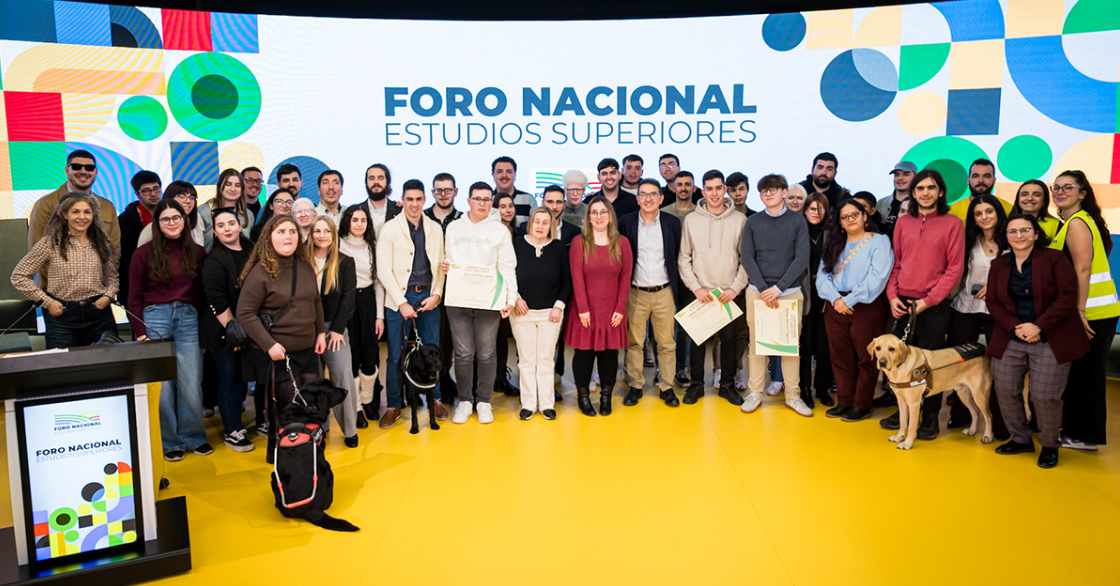
The overall objective of the meeting was to improve participants’ approach to the labour market and provide employability training through a series of workshops, activities and presentations.
Due to the practical nature of the Forum, apart from the general goal, the following specific objectives could be worked on: to develop key competences for future employability, providing the attending students with practical experiences and workshops oriented to the current demands of the labour market (for example, interview skills, communication skills, get use to different elements in a formal context, etc.).
Practical learning and exchange of experiences
The Forum began with a presentation and interaction activity for participants to know each other and improve communication and exchange of experiences throughout along the Forum. It is important to bear in mind that participated students from all over Spain, so many of them didn´t know each other. In this way, there was an additional goal: exchange experiences, improve communication skills and overall social competencies.
The first main session was a round-table discussion involving heads of Human Resources or People Departments from highly relevant organisations in Spain, including the ONCE Social Group and external companies such as Repsol and Forvis Mazars. This space enabled attendees to learn which competencies are most valued during recruitment processes, what job interviewers look for, and how to approach interviews and selection processes when you have visual impairment or deafblindness.
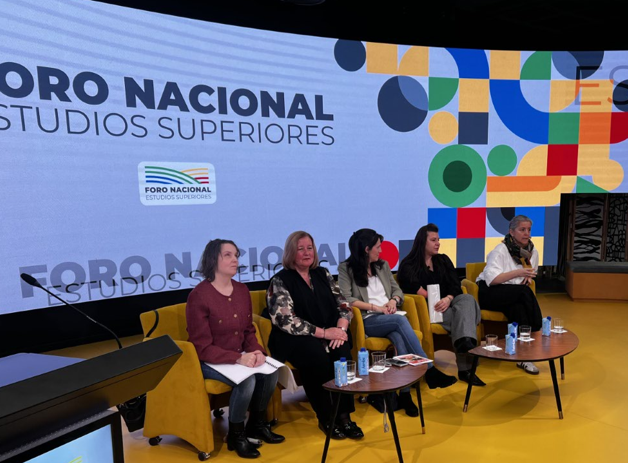
Subsequently, workshops were held where participants could take part in two of them according to their interests. Workshops were closely linked to current trends in the world of work, as well as the rise of AI for finding job or improving our employability.
Personal branding on social network. Guidance and advice were released to improve our personal brand, especially through job search tools such as LinkedIn.

AI and job searching. Student thought on the impact that AI has when it comes to improving our employability and improving its performance when we use it as a tool.
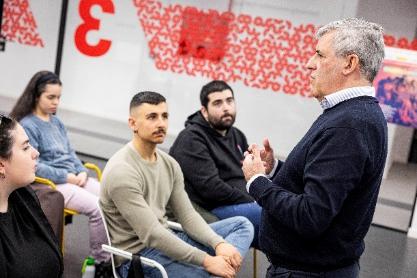
The value of self-knowledge: discovering the talent within you. Through guided reflection, participants identified key personal and professional aspects for accessing and performing in the labour market.
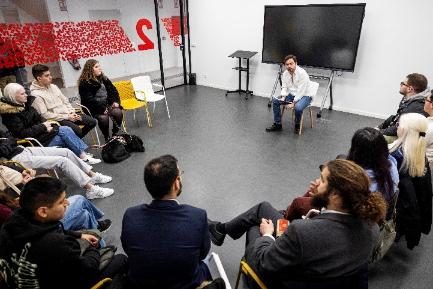
To close the second day, it was proposed as an activity go to an improvisation play in a theatre session with the aim that the students would have fun through the activity while highlighting the importance of improvisation skills when facing interviews or selection tests.
On the last day of the Forum, the following workshops were planned with a more dynamic character than the previous day, with the aim of putting into practice everything learned during the Forum.
Preparing your professional profile for the interview. Two professionals provided guidance to support interview preparation and selection processes, along with practical exercises to enhance application.

Getting to know the Employment Support Service: ONCE Employment Support Specialist presented the wide range of resources and professional support available to help people with visual impairment and deafblindness improve access to employment and professional experience.

Blind spots in sighted people regarding tactile images.
By Dorine in ’t Veld, HandsSee, info@handssee.eu (3 May 2026)
After 35 years of experience working with tactile books and tactile images and retiring from Dedicon as Product Manager Tactile Reading and Learning, I am setting up HandsSee: an initiative to promote knowledge about, and encourage the use of, tactile images. After the Tactile Reading Conference 2025 several groups were formed that exchange information. On https://www.handssee.eu/en/network you can find information and links to connect with these international experts.
I focus mainly on tactile images for blind children (and adults) that aim to help build a correct mental representation of ‘things in the world around’ when these things cannot be touched. Description alone is not sufficient: tactile support is needed to convey exact dimensions, proportions and orientation. 3D-models or replicas are not always at hand. Luckily a quick, handy and cheap method is available to make tactile images ‘on the fly’, on normal paper on a silicone baking mat (as the lines you draw will rise). Of course sketching on the fly may not always give a beautiful result, but since you can build up the tactile drawing bit by bit and explain each time what the lines, shapes and textures mean – and the blind reader can ask questions – it works very effectively. Provided that…: both the (sighted) person who is drawing and the blind reader use and understand the same form language.
Tips to learn this form language: first take a look at the HandsSee website for the latest developments, then try the ‘Roundy’ book where you will find how the tactile images are explained in the story (https://tacticos.eu/books/roundy-book/), next you can download the full version of the guidelines on https://tacticos.eu/guidelines/ and read Chapter 2. Chapter 2 paragraph 1 points out that tactile images are a ‘foreign language’ to blind children. They must learn to read tactile images, and they will need guidance. Sighted people who are not used working with tactile images often have blind spots and misconceptions that mean they cannot properly guide the children. For example, they often are not aware that:
Every type of image or drawing has its own underlying principles
How are things represented in different types of drawings? What do the lines and other elements in these drawings mean? Sighted people have learned to ‘read’ or interpret images from a very young age - unconsciously, ‘on the fly’ and without words. They are exposed to endless numbers of 2 dimensional drawings in workbooks and colouring books, artist illustrations in children’s books, comic books, etcetera. They effortlessly see depth in photos and interpret perspective.
They only realize themselves that every type of drawing or image has its own ‘underlying principles’ when they, depending on their education and interest, have to learn to read technical or scientific drawings. Similarly tactile images (all types) have their own underlying principles and sighted people have to learn them!
Tactile images are very different from their visual counterparts
For example: tactile images don’t show light and shade, colour or material. Often some details are left out for readability’s sake.
They have to close their eyes
Especially when illustrations in books are ‘inclusive’, containing tactile and full high contrast colour, sighted people forget to close their eyes. This means that it is not obvious to them what information is missing for the blind reader and what needs to be be explained (see above).
Reading tactile images with the fingers is very different from reading with the eyes
The eyes see the whole at a glance and then check for details. The fingers go from details to the whole. The eyes automatically fill in depth or curves in surfaces whereas to the fingers (everything is flat. The eyes can add what is missing when only a part of a character or object is shown in a picture. The fingers can’t. The eyes recognize an picture of a flower immediately regardless of its size or scale. To the fingers the same flower in a tactile image is hard to recognize if it is depicted much smaller or bigger.
One can only recognize and use something already known…
Blind children have incomparably less opportunities to get to know the appearance and/or depiction of object
EXAMPLE
‘Well, my child/pupil doesn’t understand this tactile image’, says a sighted lady, pointing at an image where in the middle we can feel 5 blocks, the lowest being the largest, and 6 vertical lines, each with a dot on top. When we look we see a huge birthday cake with candles. The tactile image is full colour, with different materials. Around it we see 8 silhouettes of head and neck of different animals like a giraffe, elephant, rabbit, etcetera. But what does the blind child feel in this truly ‘inclusive’ illustration?
What does the child know of the concept of ‘silhouettes’ (underlying principles) and/or the appearance of these animals (pre-knowledge)? Does the child understand that the blocks are round when seen from above and represent layers in an exceptionally big birthday cake? It takes a lot of explanation, practising, drawing and comparing with (home crafted) 3D-models to learn this form language but, once learned, it brings a lo of benefits!

Dorine in ’t Veld - HandsSee | +31 (0)6 41 474 575 | iinfo@handssee.eu | https://handssee.eu/en
Research news: Early intervention for mothers and their young children with visual impairment and additional disabilities
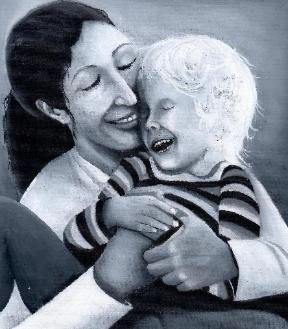
Illustration: Saara Waked
Summary: This is a report of a doctoral study exploring the effects of early intervention on children with visual impairment and additional disabilities (VIAD) and their mothers. The early intervention utilized the bodily-tactile modality (touch and movements) to increase accessibility to nonverbal information in mother-child interactions. The findings indicate positive changes in mothers’ use of touch, children’s embodied participation through movements and gestures, and emotional connections between children with VIAD and their mothers.
The doctoral thesis was completed in December 2025. It is available online:
https://urn.fi/URN:ISBN:978-952-02-0447-1
Peltokorpi, S. (2025). Promoting bodily-tactile interactions between mothers and their young children with visual impairment and additional disabilities: Four early intervention studies. Doctoral dissertation, University of Turku, Finland.
Introduction
Visual impairment may prevent children with visual impairment and additional disabilities (VIAD) from perceiving information from their parents’ facial expressions and gestures. For parents, it may be difficult to detect their children’s subtle bodily expressions and respond to them [1, 2, 3]. These challenges indicate that both children and parents have difficulty accessing each other’s nonverbal expressions in interactions. This, in turn, can hamper reciprocity in interactions. Early parent-child interactions can be promoted through an early intervention which utilizes the bodily-tactile modality (touch and movements), to increase accessibility to nonverbal information in interactions [4, 5, 6].
Method
This doctoral study investigated the effects of two early interventions on the interactions between young children with VIAD and their mothers in four studies. In Study I, tactile imitation guidance was used to guide the mother of a three-year-old child with congenital deafblindness to use the bodily-tactile modality to imitate her child’s expressions. In Studies II, III, and IV, a bodily-tactile early intervention was used to guide four mothers to use the bodily-tactile modality in early social play routines and communication with their one-year-old children with VIAD.
The principles of the bodily-tactile early intervention
1) It consisted of eight sessions and was delivered at home.
2) It aimed to increase reciprocity in mother-child interactions by using the children’s participatory resources connected to the bodily-tactile modality. First, nonverbal (visual) information in interactions was made more accessible to children with VIAD by guiding their mothers to utilize the bodily-tactile modality in early social games. When early social play routines have a repetitive structure consisting of touch and movements, children with VIAD obtain contextual information about the interactions though the sense of touch. More specifically, they can learn to memorize the type, place, and timing of touches on their bodies and use that knowledge in their participation. For instance, in “Round and Round the Garden,” a child with VIAD can learn to remember the touches on his hand and arm and participate in the storytelling by touching his palm or other parts of his arm that are connected to the rhyme.

Illustration: Saara Waked
The mothers were also guided to utilize touch and movements in communication. They were guided to a) anticipate actions (e.g., touching the child’s legs before moving them in a song) and b) respond to their children though touch (e.g., a mother is swinging her son back and forth in her lap. During a break, her son moves backwards. After noticing his movement, the mother touches his back before continuing the swinging movement), and c) use tactile signs in early social play routines. Secondly, the mothers were guided to create breaks in the early social games and observe their children’s bodies. When they observed a child’s movement or gesture, they were guided to respond to it. This aimed to foster the children’s embodied participation.
3) Each intervention session consisted of two main parts: a) discussion and video feedback and b) a triadic play session. In the triadic play session, the therapist played with the mother and her child and used modeling to demonstrate bodily-tactile games and communication through touch.
Results
The findings suggest that the mothers began to utilize more of the bodily-tactile modality in interactions with their children with VIAD during the early interventions. They increased their repertoire of bodily-tactile games and began to use touch to anticipate actions and respond to their children. The mothers also learned to use tactile signs in games and alongside their speech. Their children’s participation in interactions increased through movements and gestures. There were also positive changes in the emotional relationships between mothers and their children during the interventions.
Conclusion
The findings indicate that increasing accessibility to nonverbal information in parent-child interactions may play a crucial role in promoting the participation of young children with VIAD in early interactions with their parents.
Sini Peltokorpi
Speech and language therapist, PhD
Helsinki University Hospital, Finland

Acknowledgements
This study was funded by the Eino Jutikkala Fund of the Finnish Academy of Science and Letters, the Emil Aaltonen Foundation, the Finnish Cultural Foundation, the University of Turku, the Otto A. Malm Foundation, the Pediatric Research Center, the Turku University Foundation, and the TOP Foundation.
References
Nafstad, A. V., & Rødbroe, I. B. (2015). Communicative relations: Interventions that create communication with persons with congenital deafblindness. Materialecentret. https://www.statped.no/globalassets/laringsressurs/dokumenter/02-bokhefte/communicative-relations-uk.pdf
Fraiberg, S. (1979). Blind infants and their mothers: An examination of the sign system. In M. Bullowa (Ed.), Before speech: The beginning of interpersonal communication (pp. 149–169). Cambridge University Press.
Rowland, C. (1984). Preverbal communication of blind infants and their mothers. Journal of Visual Impairment & Blindness, 78(7), 297–302. https://doi.org/10.1177/0145482X8407800701
Chen, D., & Downing, J. E. (2006). Tactile strategies for children who have visual impairments and multiple disabilities: Promoting communication and learning skills. AFB Press.
McLinden, M., & McCall, S. (2016). Learning through touch: Supporting children with visual impairment and additional difficulties. Routledge.
Nicholas, J. (2013). Tactile cognition and tactile language acquisition - an information processing approach. In J. Dammeyer & A. Nielsen (Eds.), Kropslig og taktil sprogudvikling - En antologi om forskellige sprogmodaliteters muligheder og umuligheder, undersøgt med afsæt i personer med medfødt døvblindhed (pp. 47–79). Materialecentret.
EXTRAORDINARY – a film for all
Andrea Fajdetić, Elementary school Petra Zrinskog
Nora Krstulović, Marketing manager of the movies
Marina Andree Škop, director/producer of the film
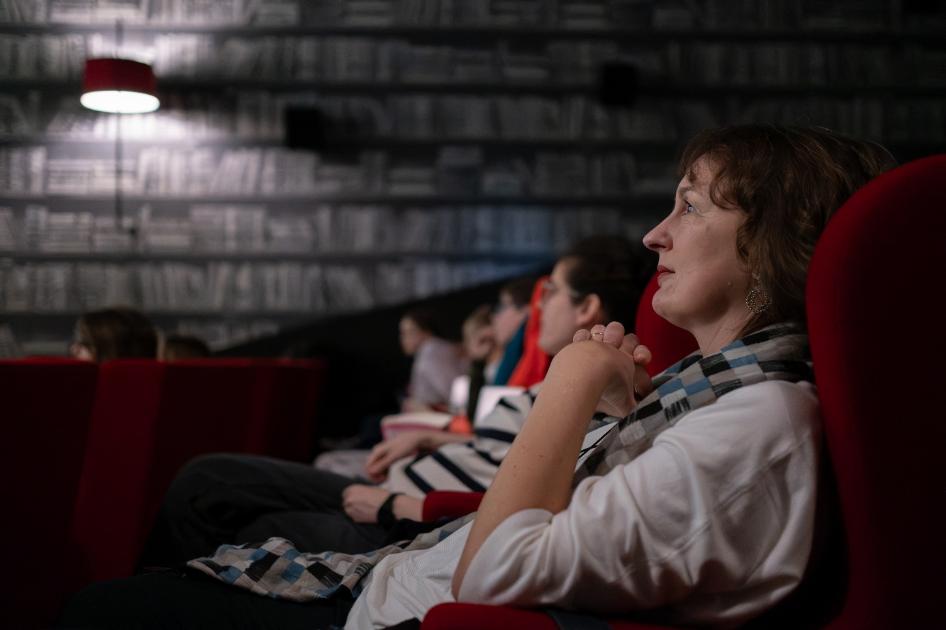
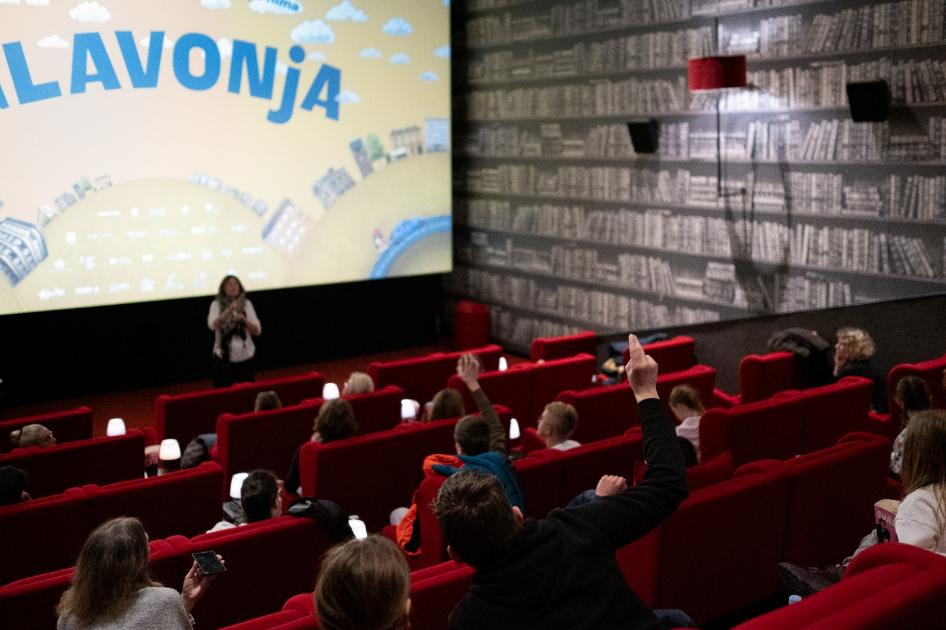
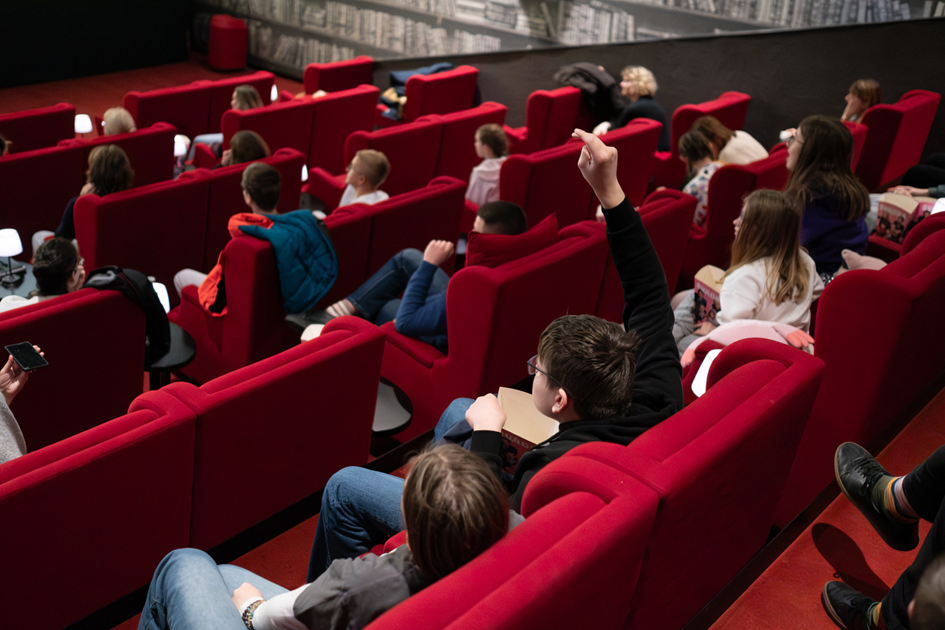
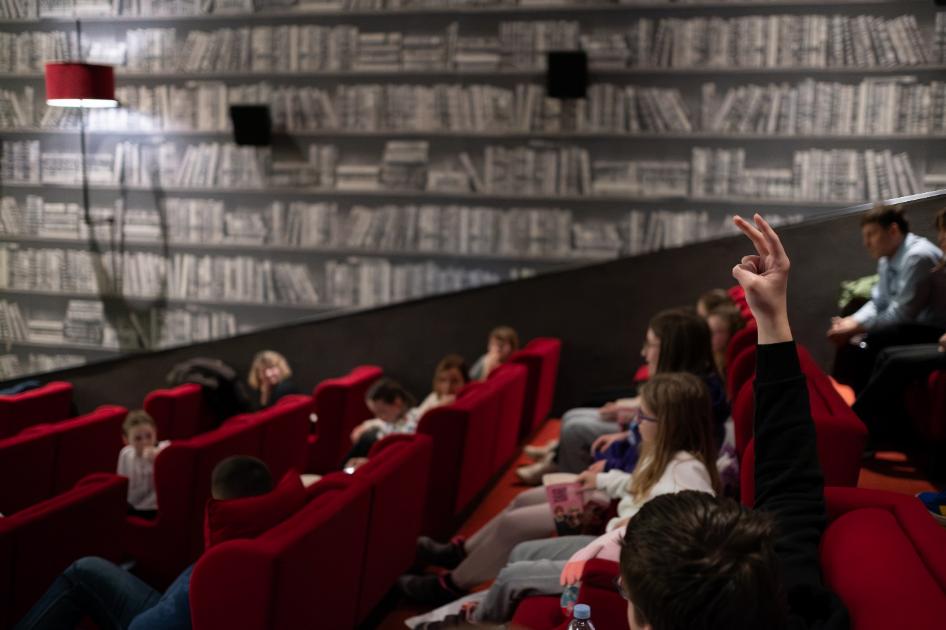
Inclusive culture and inclusion is very important area of development in the elementary school Petra Zrinskog in Zagreb. Here children with visual impairment as well other different developmental difficulties fully participate in everyday school life. There are almost 60 children with SEN in mainstream classes, and more than 10 of them have teacher assistants offering professional support. The school has an educational rehabilitator who acts as a school counsellor to help pupils, parents and teachers in their efforts to support mainstream education and inclusion. One of the activities that was organized recently was a trip to the movies to watch the film “Extraordinary”.
Both children without difficulties together with children with SEN visited the cinema to watch this movie which has the theme of inclusion. “Extraordinary” strongly contributed to our inclusive culture in school and furthermore, the workshops for pupils that followed created a platform for discussion about diversity among children and the accessibility of culture for children with SEN.
The film’s production assistant offered to coordinate the visit and arranged additional accessibility for children with SEN from our school.
Talking about the film, the director Marina Andree Škop explained that “It was important to us that neurodiversity in the film not be a label or a theme looming over everything, but rather a part of one family's life and a part of the relationships between children. A detective adventure is the perfect framework for that — it keeps the pace and tension, while at the same time creating situations in which the characters open up, make mistakes, learn, and connect. We built the humor on situations and on the overly serious world of adults, and the heart of the film is the children and their ability to embrace difference, come together, and become a team. In the end, if the film manages to entertain first and only 'along the way' open up space for empathy and conversation, then we've done what we set out to do. I'm convinced that children understand serious things best not when you serve them up as a 'lesson', but when they experience them through a story. Play, humour, and mystery are their natural language. When they're laughing and excited, they're open and present — and that's when emotion can enter more easily, without resistance and without fear".
To enable as many children as possible to see the film, a campaign has been launched with a broad network of support — from institutions to civil society organizations. The film received backing from the Agency for Education and Teacher Training, the Ombudsperson for Children, the Ombudsperson for Persons with Disabilities, the Association of Autism Organizations, and the Croatian Chamber of Education and Rehabilitation Professionals.
Particular effort was invested in inclusion as part of the "Glavonja svima" (Extraordinary for Everyone) campaign, in collaboration with the association Kultura svima (Culture for All), this became the first film whose inclusive print — featuring adapted subtitles and Croatian Sign Language — entered the regular programme of the country's largest commercial cinema chain, with audio-described screenings for visual impaired children and adults also available upon prior request. Through a rewards programme, schools and kindergartens are encouraged to attend inclusive screenings, which are frequently accompanied by discussions with the director and the young cast. A rich package of free, permanently available educational support materials has also been created: a methodological handbook for using the film in the classroom; A Guide to Shaking Your Head at Extraordinary, which answers children's questions about autism in age-appropriate language, developed in collaboration with the ASK association; a discussion guide for moderated conversations before and after screenings, developed in collaboration with HKER (Croatian Chamber of educational rehabilitators); and a video series — a beginner's guide to filmmaking — in which the young cast explains basic film concepts and the filmmaking process from their own perspective, for their peers.
The film will enter international distribution in September and will be available for screening throughout Europe.”
Open source materials that provide additional information for activities after watching film “Extraordinary” are already available.
https://e.pcloud.link/publink/show?code=kZ9bhaZQaxlQS1PRK0E3FtVPoRmpp1rHkjV
https://youtube.com/playlist?list=PLQfGWhRRiX-1qo4B5IxNqd-8s8k93aDD_&si=aBd9W6gaZlDNnxu2
Pictures for Newsletter
https://e.pcloud.link/publink/show?code=kZrck3Zyr6J1PLFx3bmwk66xCgytSCSPR0y